.avif)
I’ve been part of 15 underwater habitat missions and supported countless more.
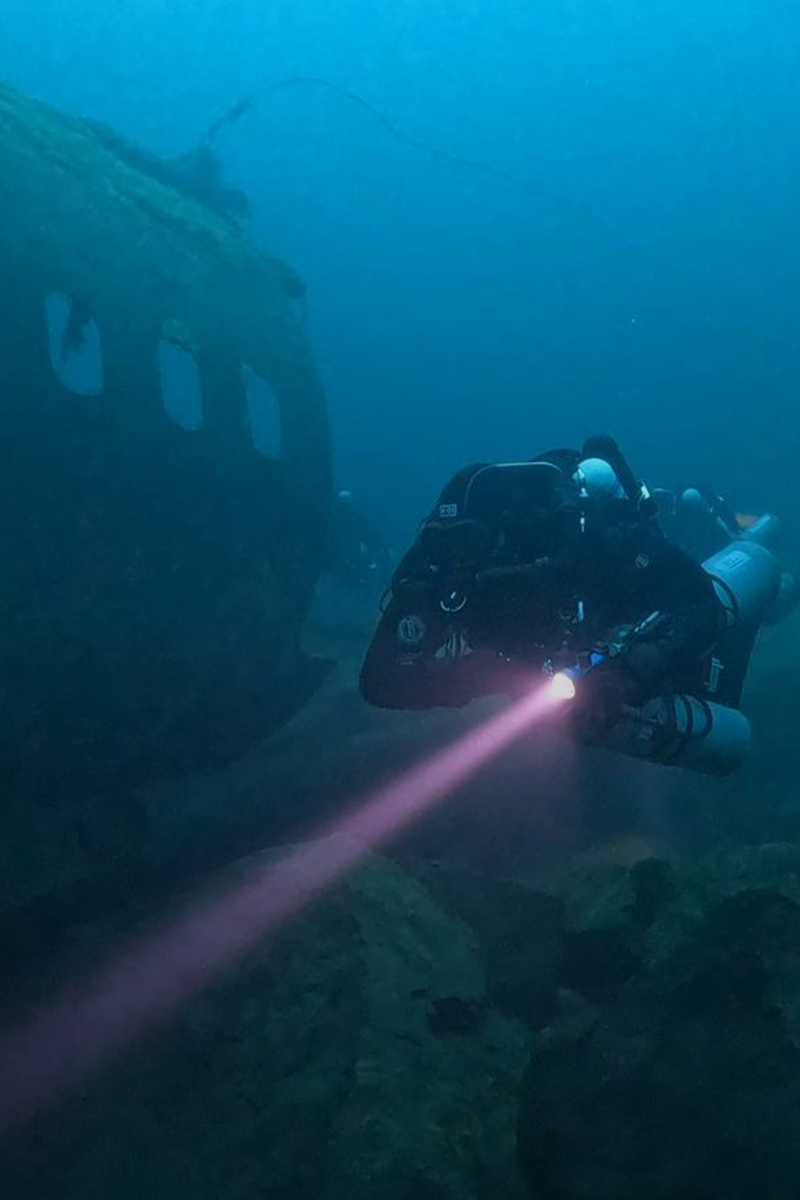
Across those 15 missions where I was part of the crew, I’ve spent close to 100 days under the ocean, living and working for weeks at time in a subsea human habitat.
People say that the opportunity to live for an extended time beneath the waves is a once in a lifetime opportunity. In fact, I saw each of those missions as a once in a lifetime opportunity. Every mission was unique and I savoured every moment.
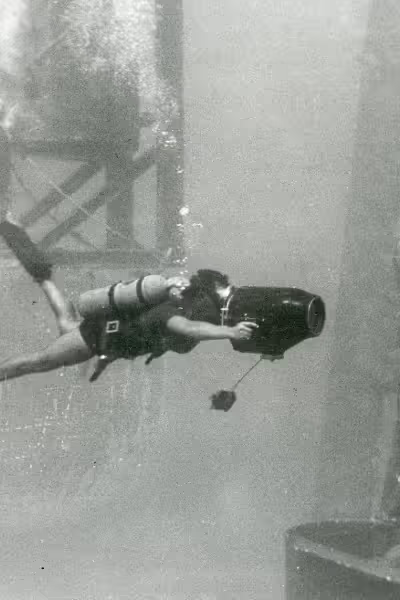
Sadly, in my first 23 years involved with underwater habitats, I witnessed a decline in use, interest and funding for habitat programs. Aquarius Reef Base, where I formerly directed habitat operations, was built almost 40 years ago. There hadn’t been talk about a new habitat for many years – decades, actually. Eventually, the time came for the final mission from Aquarius, which took place in August 2019.
I was looking at the end of an era. The work we’d done had supported more than 800 research papers and given hundreds of researchers, scientists and other users a life-changing opportunity to study the ocean and the effects being underwater has on humans. I was lucky to play a part in this, and I wanted nothing more than to keep that legacy going. But it looked unlikely the progress we’d made would be built upon any further.
Then I got a phone call.
Contuing the underwater habitat legacy
When I first spoke to DEEP, I was sceptical, mostly because I saw years of decreasing support for habitat programs and little excitement to keep the legacy going.
But the more I got to meet people throughout the organization, the more I realized they were serious.
I recall a conversation with Dawn Kernagis, Director of Scientific Research at DEEP, who I knew from my days with Aquarius. I left convinced that DEEP was 100% committed to making humans aquatic.
I realized I was being offered an incredible opportunity to keep the underwater habitat legacy alive.
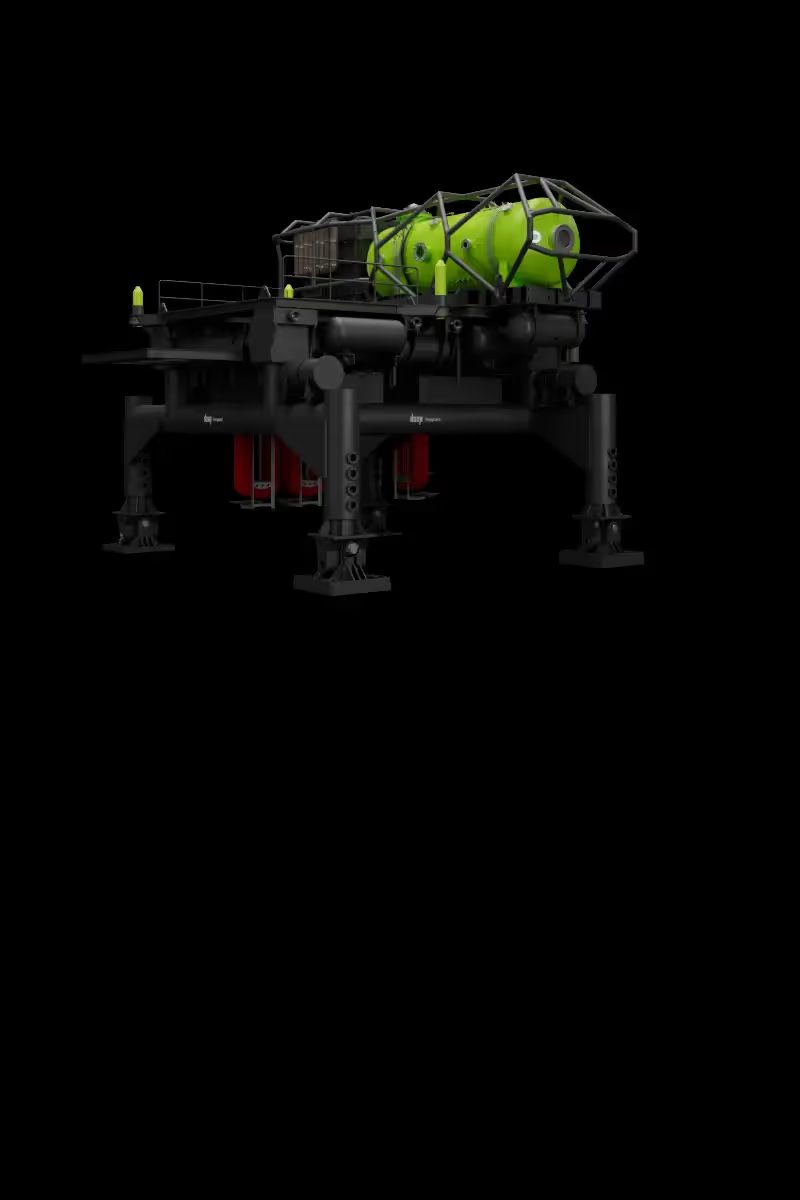
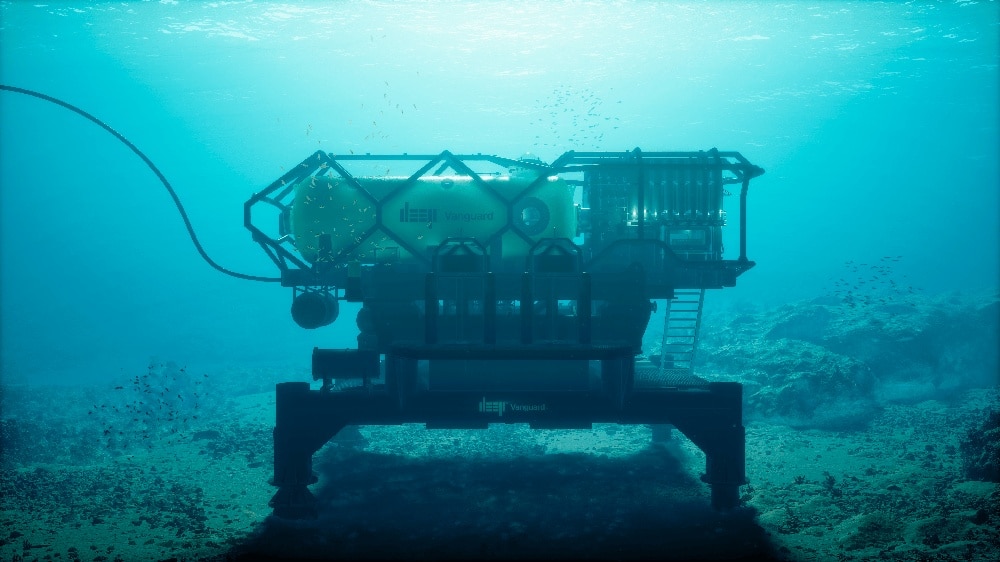
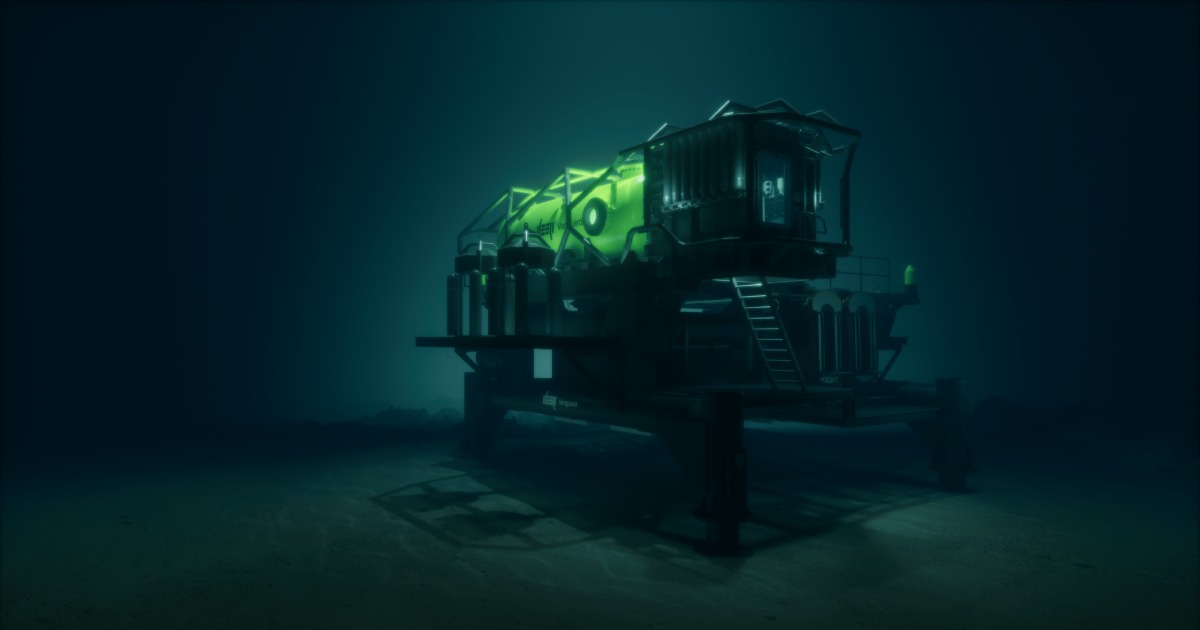
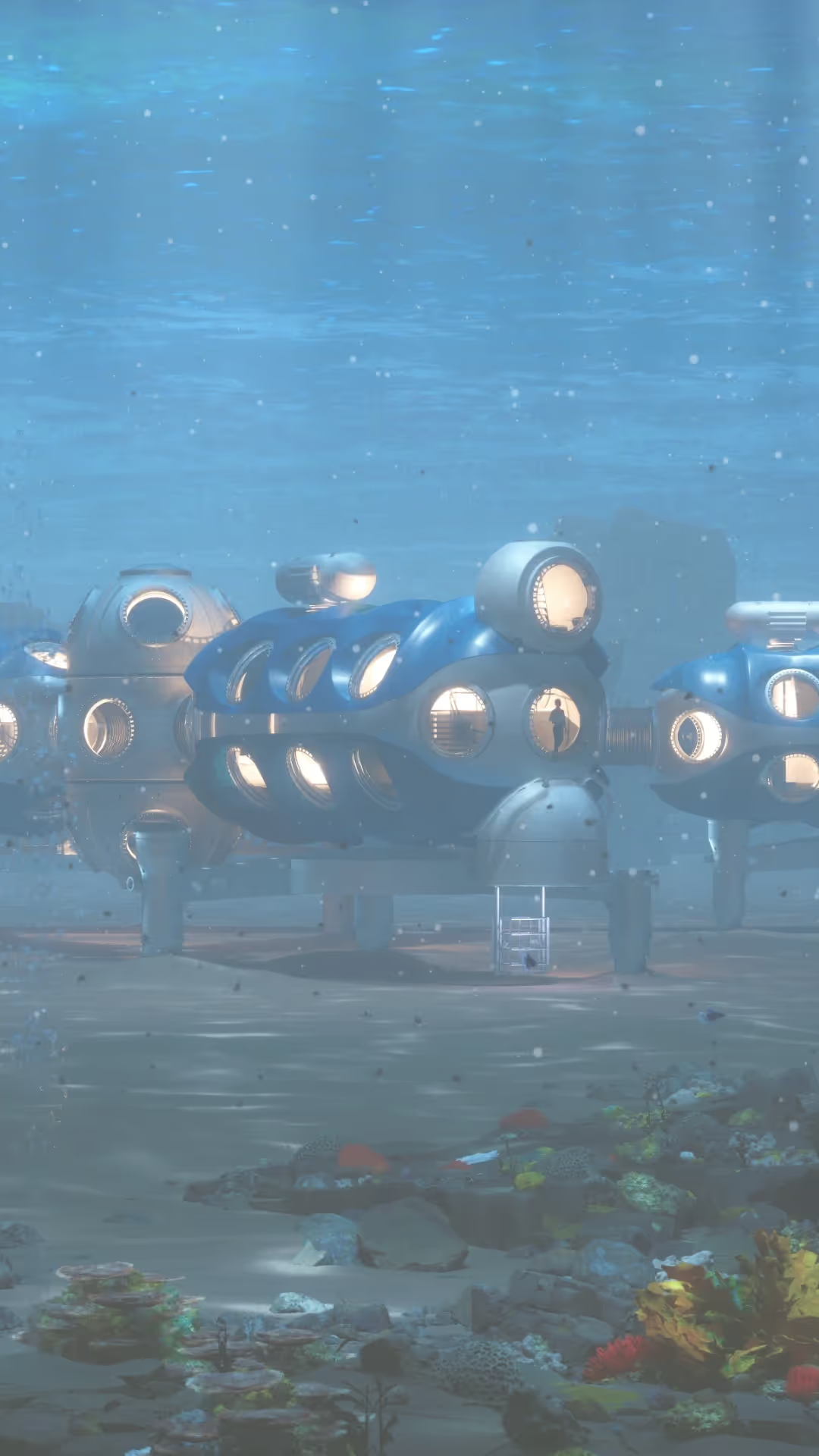
Fast forward to today and we’re at the precipice of a new era of undersea living, with DEEP’s pilot habitat, Vanguard, built and unveiled in Florida.

My journey to DEEP
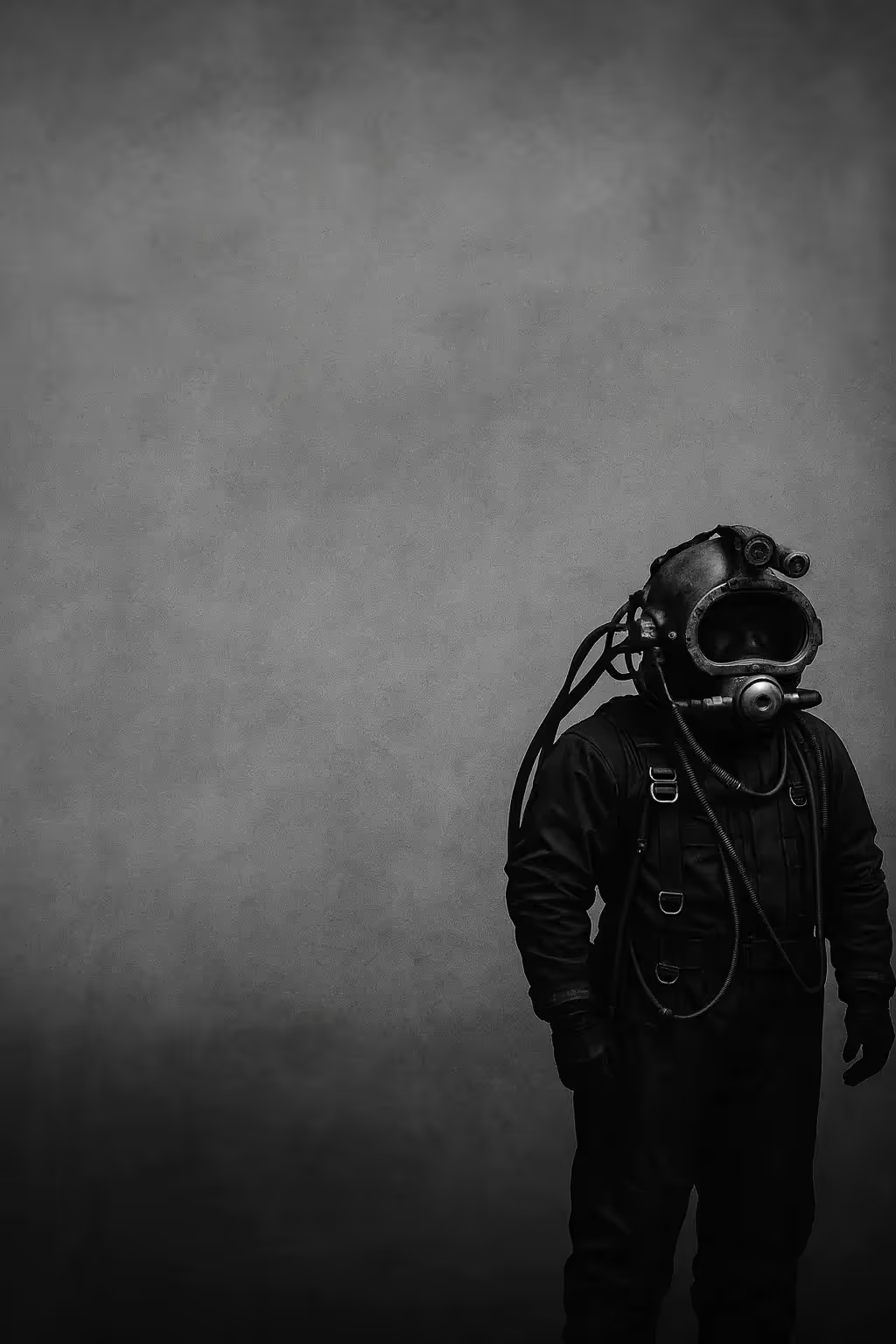
My career in the water started as a U.S. Navy diver. I specialized in scuba, surface-supplied diving, mixed-gas rebreathers, and hyperbaric medicine.
When I retired from the military after 21 years, I joined the National Undersea Research Center. That’s when my life really changed. I learned about an underwater habitat, and this was my “this is what I want to do” moment. I started working for the Aquarius program and, since then, operating a habitat is what I’ve wanted to do.
It has become a passion for me to oversee that an underwater habitat is maintained and provides a safe, unique, productive human experience.
At DEEP, I have two key responsibilities: the ongoing maintenance of subsea human habitats and the planning of habitat missions.
That means making sure all the life support systems are properly maintained and functioning before the mission starts, and then throughout the mission, it also means making sure the maintenance and testing required to comply with regulations and to maintain classing takes place.
The other side of the role is planning our clients’ missions and working with those clients and users to ensure they meet their objectives when they are underwater.

What is operating a habitat like?
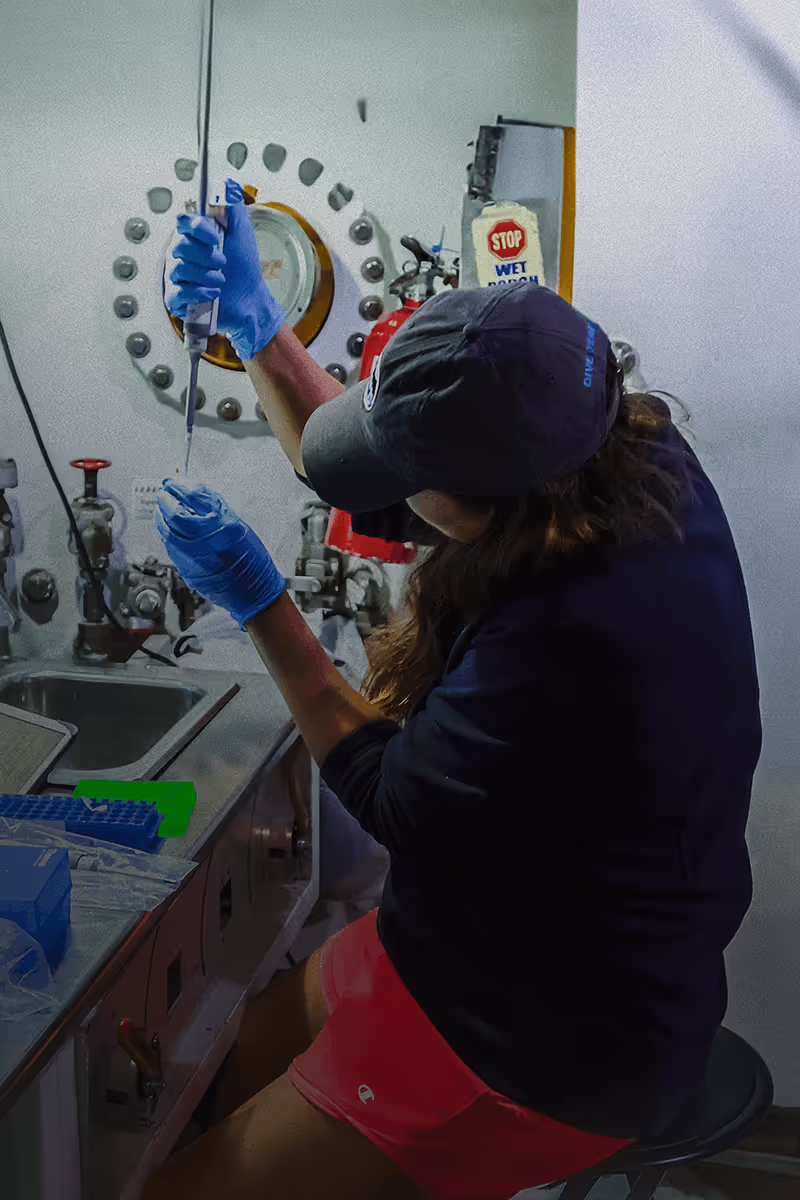
As an operator inside the habitat or a supervisor for the diving operations, the day starts much like your day on dry land. You get up, have a quick breakfast. Then the real work begins.
You're there to keep everyone safe and to facilitate the mission, whether it be marine research, diver training, or human physiology research.
You’re getting the crew prepped for their dive. You're checking all the life-support systems. When I say life-support system, I'm talking about the supply of breathing medium and monitoring various parameters (oxygen, carbon dioxide, temperature, humidity). Communications is part of life support too. You’re communicating with the divers when they are out on an excursion. You're communicating with the surface over radio, where a team will be manning a watch desk at the operating base.
Then you might need to carry out maintenance to the exterior of the habitat too. I’ve helped develop procedures, for example, to swap out a penetrator. Imagine a camera cable that comes from the wet side of a habitat through a hole in the hull. Believe it or not, you can safely change those underwater if you do it the right way.
It's almost nonstop until late afternoon and that’s when you take a break and you pause to look out a viewport and remind yourself, “Wow, I'm living underwater.”

What can you do from a habitat?
I’m thrilled that we’re so close to getting Vanguard in the water. I’ve seen how excited researchers and other groups get when they get to work from a habitat. We’re about to open that opportunity to the world again.
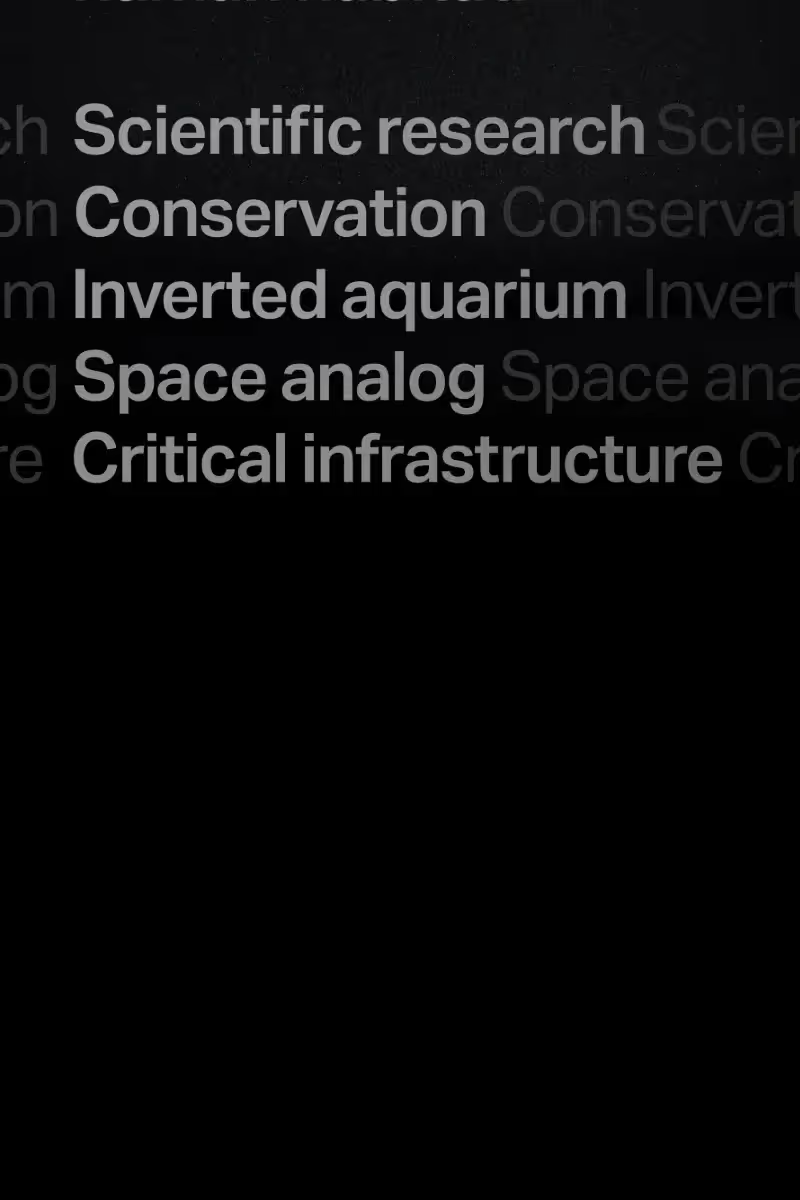
Vanguard will have a broad spectrum of users. Scientists, astronauts, commercial divers, professional divers, media groups – I can see a lot of different individuals benefitting from the investment we’re making in subsea habitation.
Regardless of who’s using Vanguard, the key thing is that they can spend up to nine hours working underwater which is something they just cannot get from a boat. They have immediate access to the underwater environment.
This is going to be game changing for all kinds of research. There’s a plethora of conservation and oceanographic research, whether that’s studying sponges, coral restoration and transplantation, studying the gases that are dissolved in seawater, monitoring the temperature of the water, acoustic research.
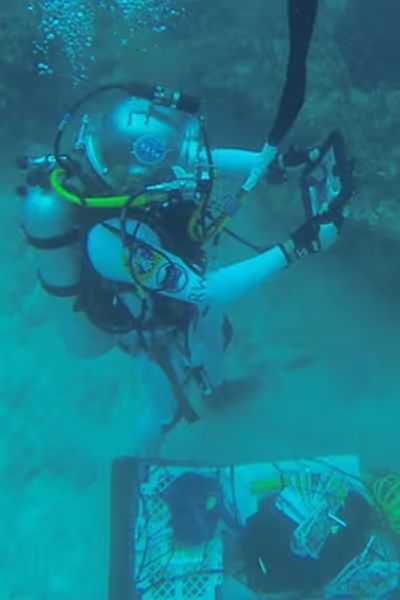
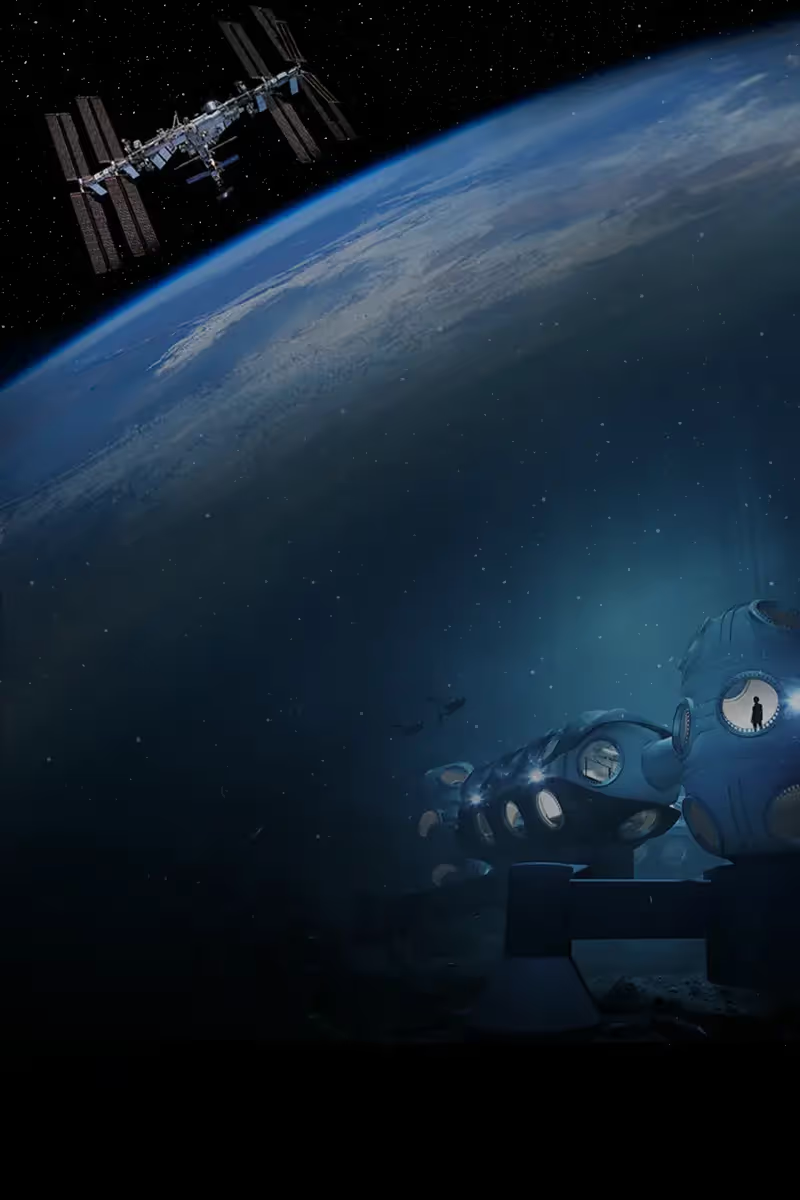
I’d also like to see Vanguard used for astronaut training, which is something habitats have been used for successfully in the past. It’s a confined environment where you must work closely with other individuals. It can really prepare you for living in space. In fact, a lot of astronauts selected for spaceflight have done analog missions on previous underwater habitats. DEEP and Vanguard can continue that legacy into the future.
The best way to understand the breadth of what can be achieved in a habitat, though, is to share an example. Every mission has something that’s particular to it that sticks in the mind. There’s one that was especially unique and just plain cool.
It was a NASA astronaut mission where we simulated a remote robotic surgery. The idea was to simulate this underwater in space-like conditions as a stepping stone to then performing remote surgery in the space station. Imagine being inside a subsea human habitat and you have a robot inside that’s simulating a real surgery, while the surgeon operating the robot is on dry land in Canada connected through the internet. Amazing, right?
Why Vanguard matters
I’ve spent nearly a quarter of a century working with underwater habitats, close to 100 days living beneath the surface. I’ve seen the interest fade as the technology aged, and for a long time it felt like an important means to understanding the ocean might quietly disappear.
But Vanguard changes that. This isn’t only a new habitat, its new energy, new vision, and a reminder of why I fell in love with this world in the first place.
What excites me now is the future: giving people the gift of time underwater, watching that moment when they realize they’re not just diving, they’re living there, and knowing this is only the beginning.
Being part of DEEP feels like picking up something I never wanted to put down, and I can’t wait to see where we go next beneath the surface.

.png)
.png)
.png)
.avif)
.avif)
.jpg)
.avif)
.avif)